Trust accounting software for lawyers that keeps client funds separate
EvidenceDesk trust accounting records every deposit to and disbursement from client trust and IOLTA accounts on a per-client, per-matter ledger, so attorneys can see available funds, apply them to earned fees and prepare reconciliations.

- Trust accounting
- Trust accounting is the recordkeeping lawyers use for money they hold on behalf of clients, such as retainers and settlement funds. It keeps client funds separate from the firm's own money and documents every transaction for each client.
What is trust accounting for law firms?
When a client pays an advance retainer, or a settlement check arrives, that money still belongs to the client until fees are earned or the funds are disbursed. Professional conduct rules require lawyers to hold such funds in a trust account and to keep records showing exactly whose money is in it. Trust accounting is the set of records and controls that make this possible.
Mistakes in trust accounting are among the most serious compliance issues a firm can face, so the records must be accurate and up to date. General bookkeeping software can track a bank balance, but it usually does not keep a ledger per client and per matter or tie trust activity to legal invoices.
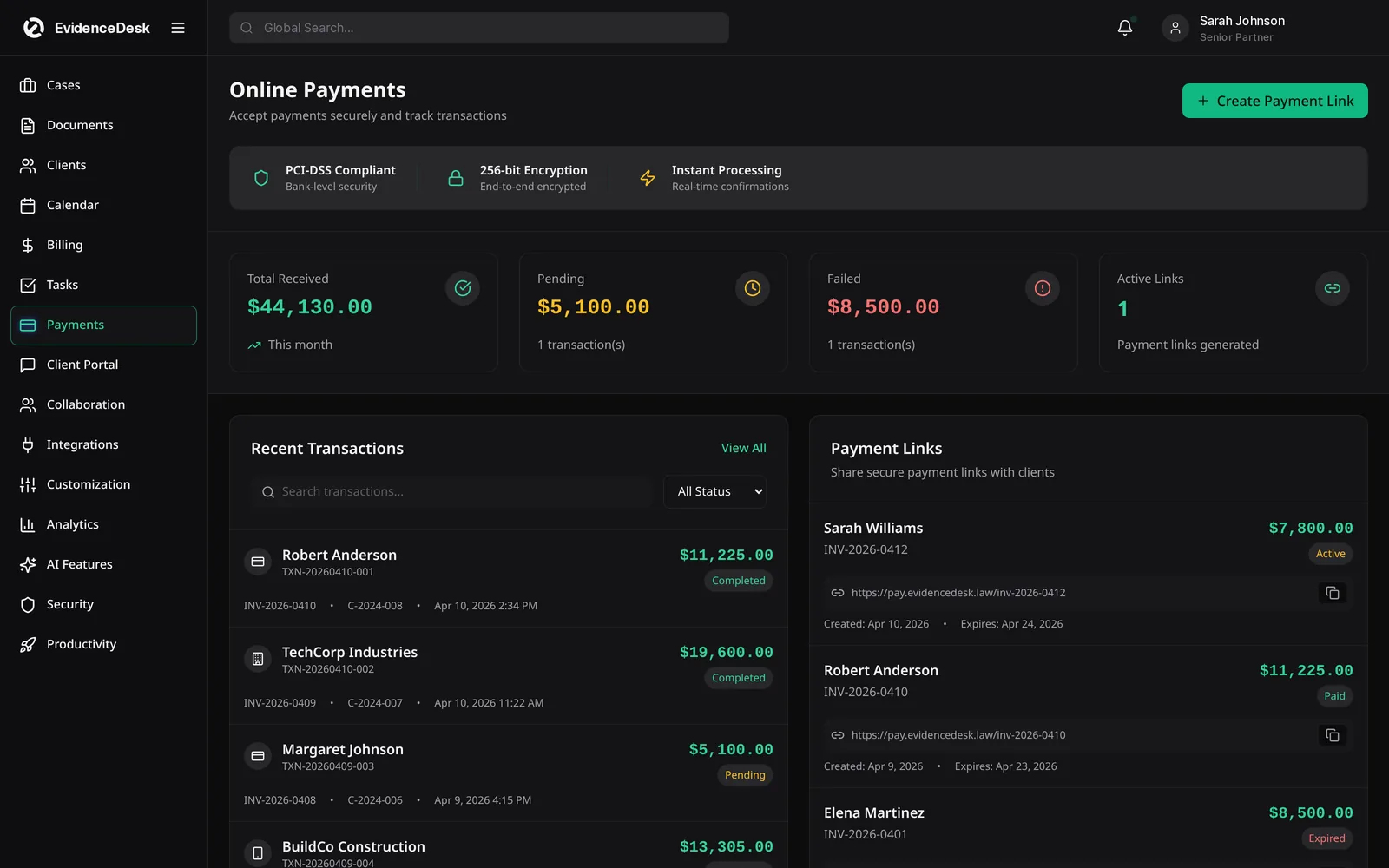
The three records every trust account needs
Trust account journal
A chronological record of every deposit and withdrawal for the bank account.
Client ledgers
A separate running balance for each client (and often each matter) showing funds received and disbursed.
Bank statement
The bank's record of the account.
Three-way reconciliation compares all three. The journal balance, the total of all client ledgers and the adjusted bank balance should match. Many state bars expect regular (often monthly) reconciliation; check the rules in your jurisdiction.
How EvidenceDesk handles trust accounting
Record deposits
To trust against the client and matter, with date, source and reference.
See available funds
On the matter before billing.
Apply trust to invoices
Only for earned fees, creating a transfer record from trust to operating.
Record disbursements
Such as settlement payments to clients or third parties.
Report
Per-client ledgers and journal activity to support reconciliation.
Trust accounting example
A client deposits a retainer into the firm's IOLTA account. The deposit is recorded on that client's ledger. Over the month the attorney records time on the matter. At month end the firm issues an invoice, applies part of the retainer to the earned fees and transfers that amount from trust to operating. The client ledger shows the deposit, the transfer and the remaining balance, and the invoice shows the trust payment applied.
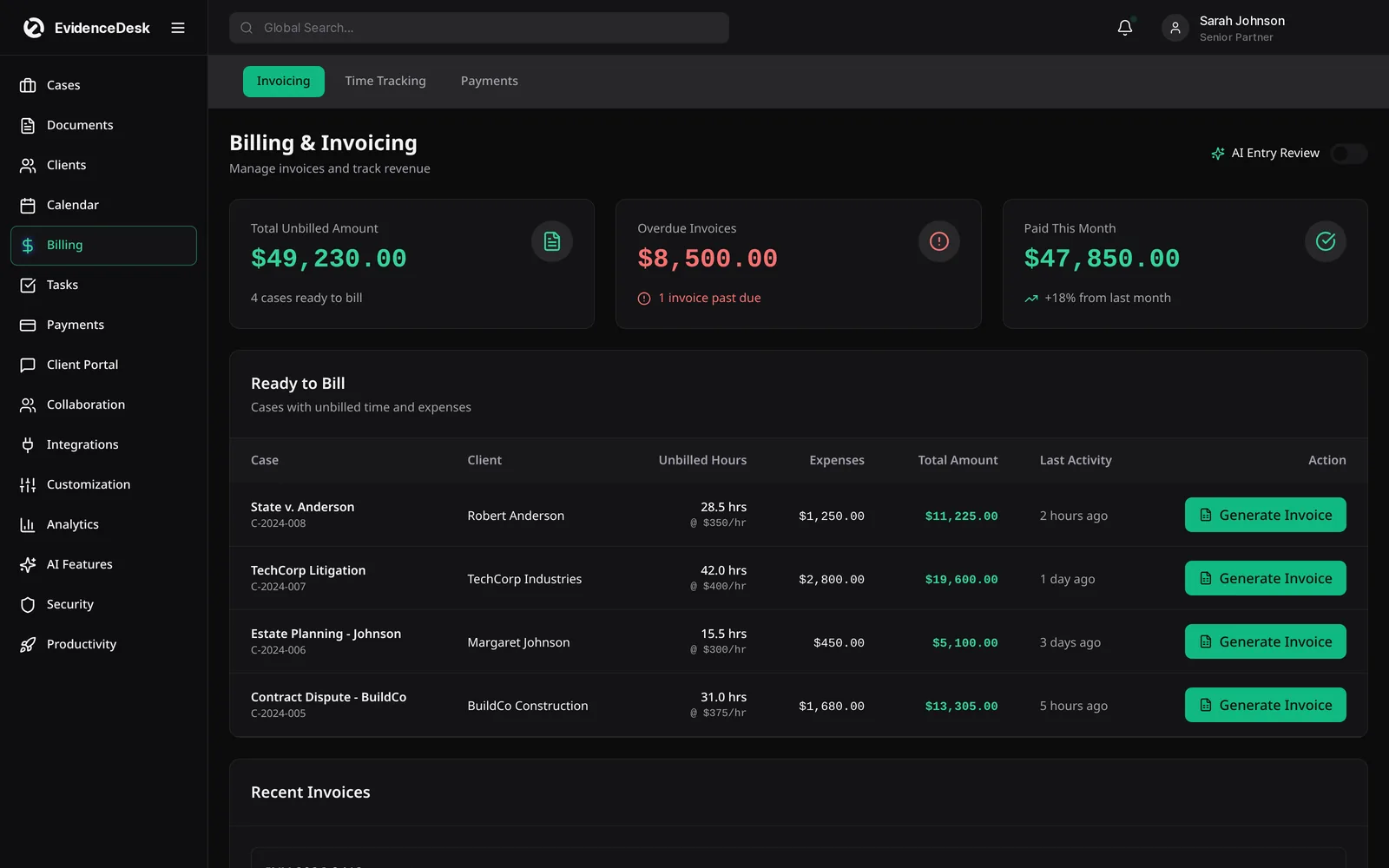
Good trust accounting habits
Never deposit firm money into trust beyond what your rules allow to cover bank fees.
Never pay firm expenses from trust.
Do not let any client ledger go negative.
Reconcile on the schedule your jurisdiction requires and keep the records.
Tell clients when funds are applied, ideally on the invoice itself.
This page is general information, not legal or accounting advice. Confirm the trust account rules of your state bar.
Trust accounting in EvidenceDesk plans
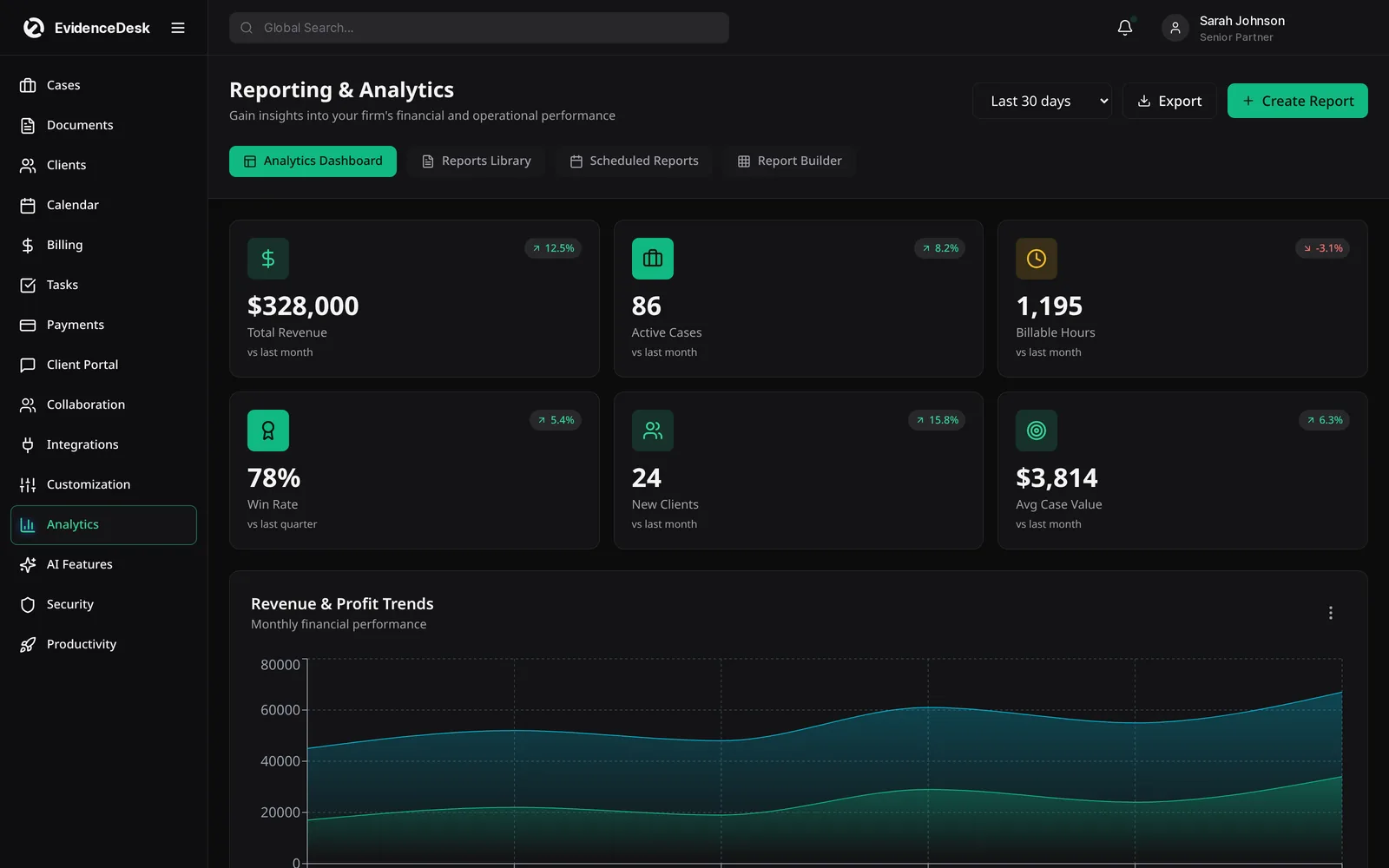
The trust ledger with three-way reconciliation is included on every EvidenceDesk plan, from Solo upward, because trust compliance matters as much to a solo attorney as to a large firm. Firm and Litigation Pro add QuickBooks and Xero sync, so trust and operating activity can be reflected in the firm's books, and Litigation Pro adds audit logs for a detailed record of changes.
Frequently asked questions
What is trust accounting?
Trust accounting is the recordkeeping lawyers use to track money held for clients, such as retainers and settlements, separately from firm funds, with a ledger for each client.
What is the difference between a trust account and an IOLTA account?
An IOLTA account is a type of pooled trust account for client funds that are nominal in amount or held for a short time; the interest goes to a state program. Larger or longer-held client funds may need a separate interest-bearing trust account. See what is an IOLTA account.
What is three-way reconciliation?
Three-way reconciliation compares the trust account journal, the sum of client ledgers and the bank statement to confirm they agree.
Does EvidenceDesk include trust accounting?
Yes. Trust ledgers are linked to each matter and connected to billing, so trust funds can be applied to invoices with a recorded transfer.
Which EvidenceDesk plans include trust accounting?
Every plan, including Solo, includes a trust ledger with three-way reconciliation. See the pricing page for the full comparison.
Explore related pages
What Is an IOLTA Account?
What is an IOLTA account? How IOLTA trust accounts work, when lawyers must use them, core rules and three-way reconciliation explained.
Read moreBilling & Time Tracking
Legal billing software with built-in attorney time tracking, invoicing, expenses and trust (IOLTA) accounting support, connected directly to each matter.
Read moreHow Do Lawyers Get Paid?
How do lawyers get paid? A clear guide to hourly billing, flat fees, contingency fees, retainers and trust, and how law firms invoice and collect payments.
Read moreLegal Invoice Template
Free legal invoice template generator for attorneys. Add time entries and rates, apply trust funds and print or save a law firm invoice as PDF in your browser.
Read morePersonal Injury
Personal injury case management software to track medical records, providers, liens, damages, demands and settlements, with trust support.
Read morePracticePanther Alternative
Considering a PracticePanther alternative? Compare EvidenceDesk with PracticePanther on case management, billing, trust accounting, evidence and client tools.
Read moreEstate Planning
Estate planning software for wills, trusts and probate: flat-fee workflows, document checklists, signing appointments and a client portal.
Read moreSee how EvidenceDesk brings cases, evidence, billing, clients and calendar together. Your Evidence. Organized. Airtight.
Cloud-based · Works in any browser · Plans from $39/user/mo